When to Remove Docks in New Hampshire and New England
Dock removal isn’t just about pulling your dock out of the water—it’s about protecting your investment and ensuring it lasts for years to come. At Raise A Dock, we’ve worked with countless waterfront properties across New England, and we know the timing and technique for safe, efficient dock removal.
The Best Season for Dock Removal
In New England, the ideal time to remove docks is late fall, typically October through early November. Here’s why:
- Before Ice Forms: Ice expansion can twist, crack, or damage dock frames and hardware.
- After Water Levels Drop: Fall often brings lower water levels, making removal easier and safer.
- Before Harsh Weather: Removing docks before winter storms prevents costly damage.
Waiting too long risks ice damage and makes removal more dangerous and labor-intensive.
Freshwater vs. Saltwater Considerations
- Lakes and Ponds: Remove docks before the first freeze—usually late October. Ice can form quickly in northern areas.
- Rivers: Strong currents during fall rains can complicate removal. Plan for a calm-weather window.
- Oceanfront Properties: Coastal docks face tides and nor’easters. Remove before late fall storms to avoid structural damage.
Why Dock Removal Matters
Proper removal prevents:
- Ice damage to frames and decking.
- Hardware corrosion from prolonged exposure.
- Premature wear from winter storms and shifting water levels.
Pro Tip: Know Your Dock Type
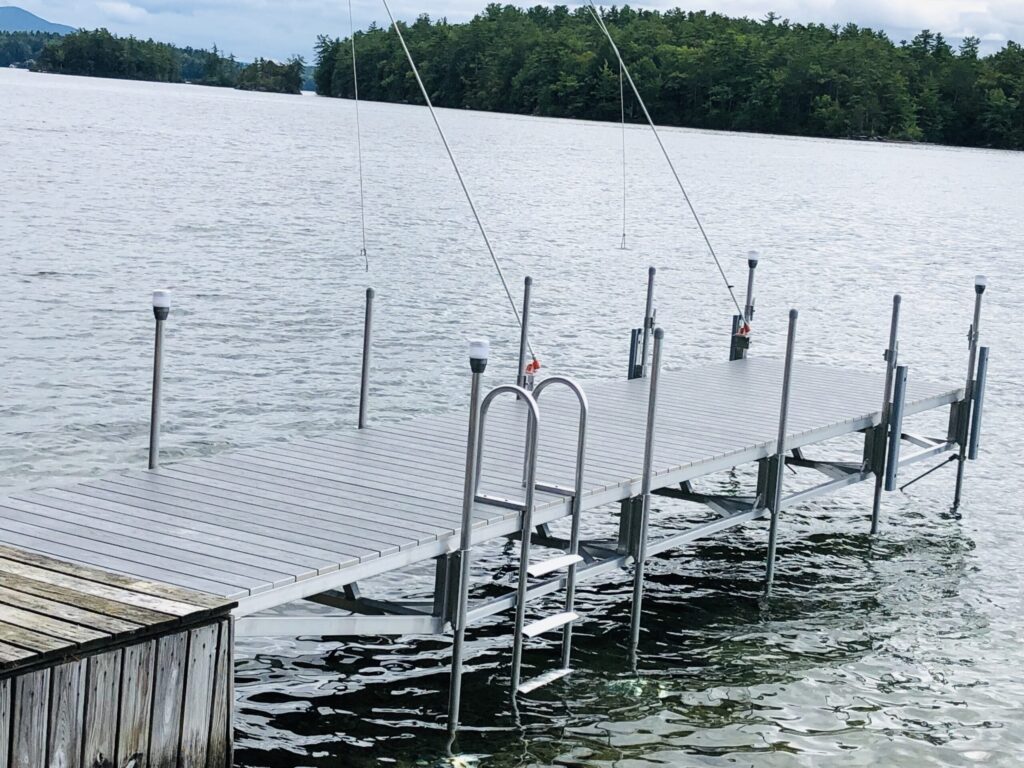
- Raise A Dock Aluminum Docks: Lightweight and modular, making seasonal removal simple and efficient.
- Sectional Docks: Require more effort to disassemble and store, but offer flexibility for unique shorelines.
Raise A Dock: We Handle It All
When you buy a dock from Raise A Dock, you’re not just getting a premium product—you’re getting full-service care. We handle seasonal removal, spring installation, and inspections or repairs whenever needed. That’s what sets us apart from other dock stores: we make waterfront living worry-free.